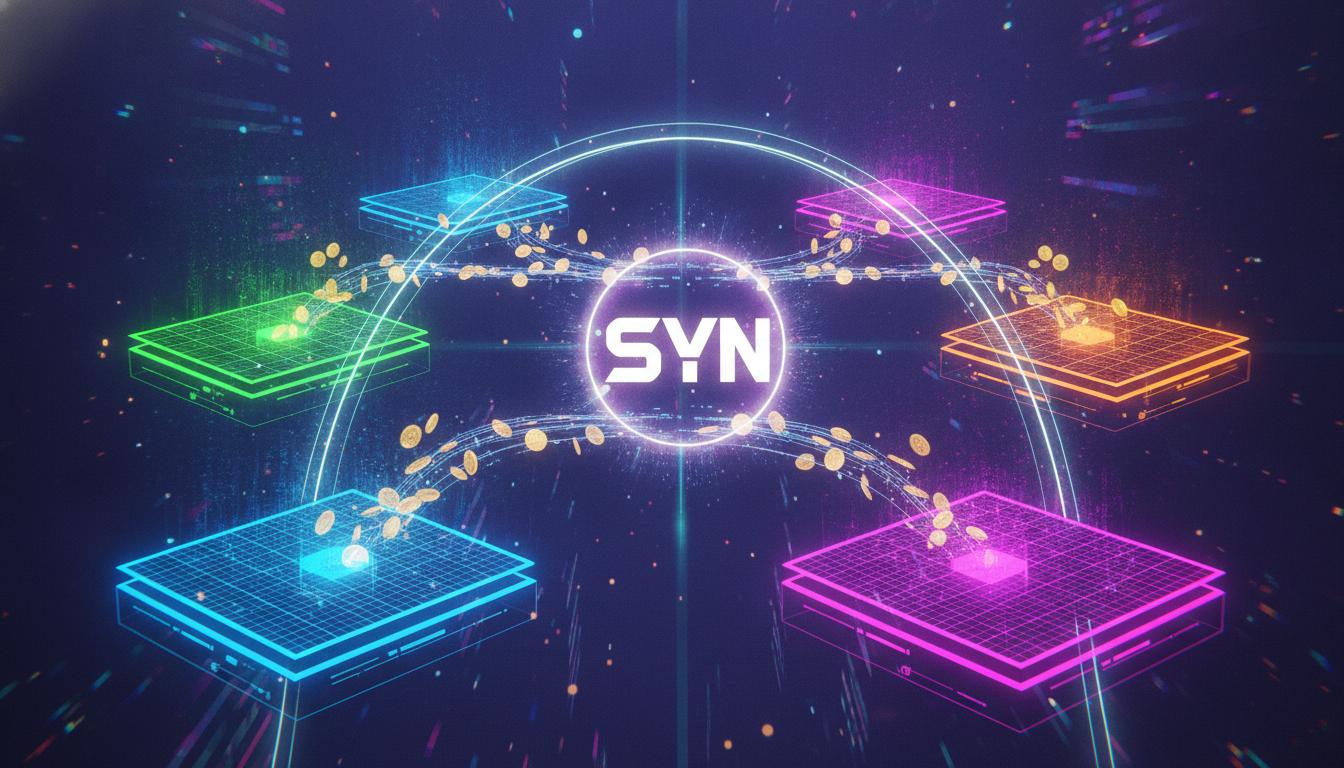
The multichain world sounds great — until you try to move assets from one network to another. Then the pain begins: different interfaces, different risks, and everywhere the feeling that you're walking through a minefield blindfolded. Synapse is one of the projects that has taken on the task of eliminating this pain. Without promising the moon. Just infrastructure.
Let's break it down by facts: what it is, how it works, who built it, and where the honest risk lies.
What is SYN and What Problem Does It Solve
To put it very simply — Synapse Protocol is a cross-chain bridge. It allows you to move assets: tokens, stablecoins, liquidity — between different blockchains. Ethereum, Arbitrum, Optimism, BNB Chain, Avalanche, and a dozen other networks — Synapse works with them as if they were a single system.
The problem it solves is called fragmentation. Today's crypto market is dozens of isolated networks. Liquidity in one, applications in another, users in a third. To move funds between them, you usually have to go through a quest: a centralized exchange, several exchange steps, losses on commissions. Synapse removes this quest and connects networks directly.
SYN is the native token of the protocol. It is used for governance, staking, providing liquidity in pools, and paying a portion of fees. On paper — a classic utility model. In practice, the value of the token directly depends on the volume of transactions through the protocol.
Technology: Not Just a Token Mover
This is where it gets interesting. Most bridges do one thing: they take a token in network A, lock it, and issue a wrapped version in network B. Synapse went further.
In addition to asset transfer, the protocol implements cross-chain messaging. This means that applications can be built on Synapse that work across multiple networks as a single entity — not as a set of copies, but as a unified product. For example: a DeFi protocol that sees liquidity from five networks simultaneously and routes between them without user intervention.
Asset transfer works through liquidity pools deployed in each supported network. Security is provided by a network of validators and verifiers — they are the ones who confirm the legitimacy of cross-chain operations. The combination of 'bridge + messaging' is what makes Synapse an infrastructure project, not just an exchange with a nice interface.
Who's Behind It
The Synapse Labs team is based in Singapore and is mostly pseudonymous — a standard story for first-wave DeFi protocols. The core of the project is known by their X handles: founder AureliusBTC, as well as Socrates0x, Caesar0x, Trajan.
These are not newcomers. Before Synapse, the same team built the Nerve protocol — one of the early bridges on BNB Chain. This means cross-chain is not a new narrative for them, but a real development track record.
A notable reinforcement at the operational level: Max Bronstein took the position of COO — formerly head of Coinbase Ventures. Before Coinbase, he was involved in creating some of the first DeFi credit markets in the Dharma project. These are no longer 'crypto anonyms with a whitepaper,' but people with a concrete track record in the industry.
Protocol governance, in turn, relies on a DAO — SYN holders vote on key decisions. On paper — decentralization. In practice, as always, one needs to look at the actual token distribution and voting activity.
Market Position
Cross-chain bridges are critical infrastructure for the multichain world. As the ecosystem expands to dozens of L2s and alt-chains, the demand for quality bridging only grows. Synapse is one of the notable players here: the protocol has processed billions of dollars in transaction volume, and it has enough integrations to be considered a real market participant.
But here's the thing: competition in the sector is fierce. LayerZero, Stargate, Wormhole, Axelar — each of them solves a similar problem and seeks market share. Synapse is not a monopoly and not the only option. For an investor/trader, this means one thing: the foundation is there, but you need to monitor volumes and market share in real-time, not believe past numbers.
Honest Risk: Why Bridges Are a Separate Conversation
Let's talk straight. Cross-chain bridges have historically been the primary target for major hacks in crypto. Ronin ($625 million), Wormhole ($320 million), Nomad ($190 million) — money was siphoned off precisely through bridges. Not through DEXs, not through lending platforms — through bridges.
Why? Because a bridge is essentially a smart contract that holds users' real funds across multiple networks simultaneously. One bug in the verification logic, and all liquidity is at risk. This is not a reason not to use bridges. It's a reason to look at audits, bug bounty programs, and incident history first, not at the end of the whitepaper.
Specifically for Synapse: the protocol has undergone audits, but investors are obliged to check the latest reports themselves — the market doesn't stand still, and code is updated.
SYN Risks in Brief:
- Smart contract risk — a vulnerability in the bridge protocol could potentially mean loss of user funds and a collapse in confidence in the token.
- Competitive pressure — LayerZero, Stargate, and others are actively competing for the same integrations and TVL.
- Pseudonymous team — despite a positive track record, this remains a risk factor in case of force majeure.
- DAO governance — actual decentralization depends on holder activity; without it, governance is just on paper.
- Tokenomics — the value of SYN is directly tied to the volume of transactions through the protocol: if volumes drop, so does the narrative.
Verdict
Synapse is a real product with real application, not a 'token for a narrative.' A team with cross-chain experience, recognizable people in operational roles, and working technology. Not hype.
But bridges are inherently a high-risk area. You can't just look at a nice volume chart and go long. Audits, incident history, current TVL, and market share are mandatory checks, not optional ones.
""Infrastructure earns when it's used. Watch the volumes — they'll tell you more than any press release." — Dok OG"
"Synapse is real infrastructure with a battle-tested team, not hype. But bridges are a high-risk zone: checking audits and security is mandatory before entering a position."